Case studyAI product
Prmtr.ai
Ask why the numbers moved, and get a story back — not another dashboard.
An AI data analyst that knows your data and answers in plain language, instantly.
Visit prmtr.ai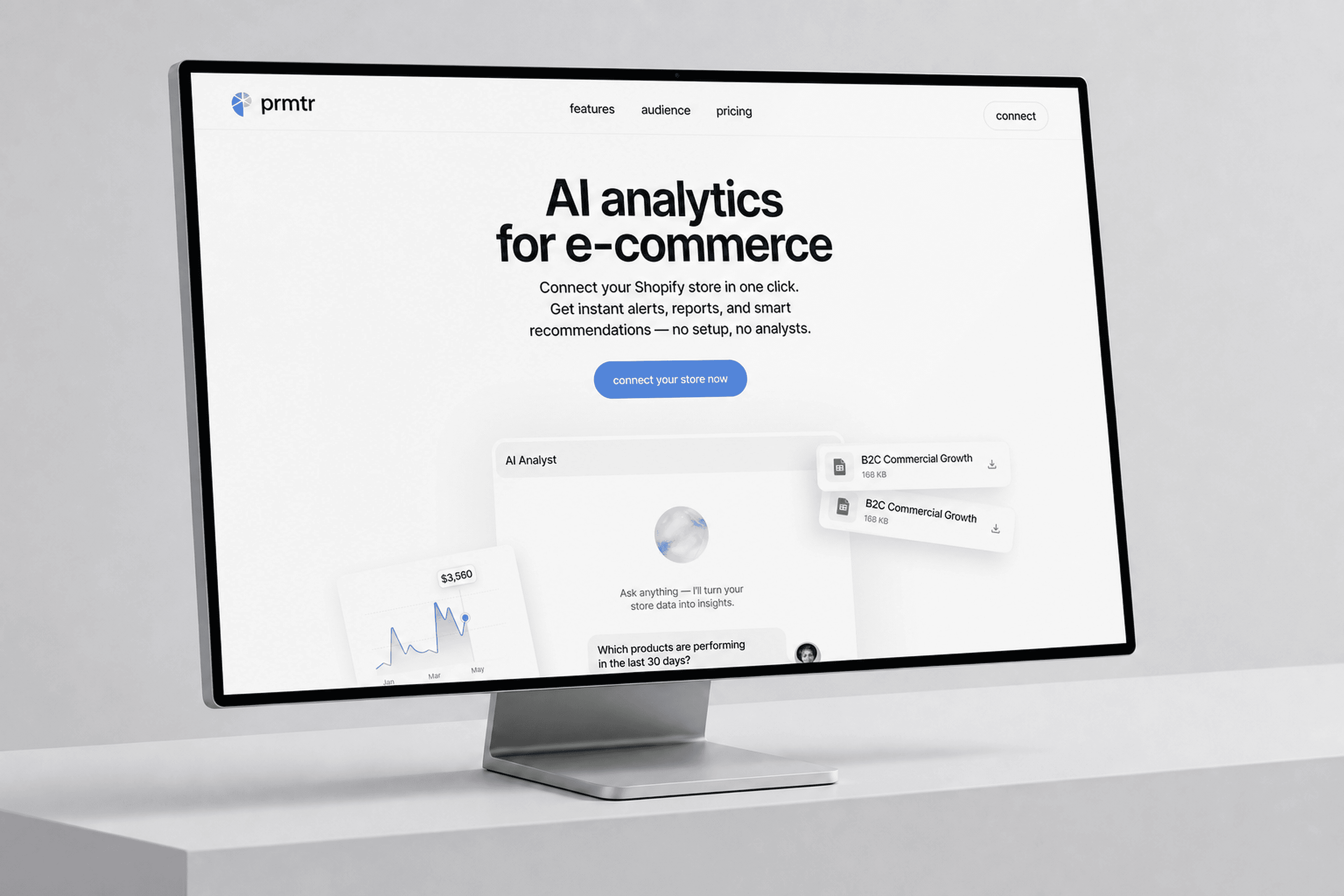
The work, the thinking and the value behind it.
Prmtr turns fragmented commerce data into a conversational working surface. Instead of opening several dashboards and piecing together an explanation, a team member asks a business question in everyday language and receives a clear account of what changed and why.
The product brings the data pipeline and the analysis experience together: Shopify and operational data are prepared in a shared foundation, then an AI layer translates questions into analysis and analysis into a narrative people can act on.
E-commerce operators, commercial leads and decision-makers
AI product
- Conversational analytics
- Commerce data foundation
- AI orchestration
- Product experience
The operating reality
E-commerce teams on Shopify drown in data. Meama, a leading Georgian coffee brand, had rich datasets and still could not answer simple questions quickly — every change in a metric turned into a meeting and an afternoon of analysis.
Traditional dashboards were useful for monitoring, but they still left the team to connect the dots. The real need was not another chart; it was a dependable way for more people to investigate a change without waiting for a specialist.
The product response
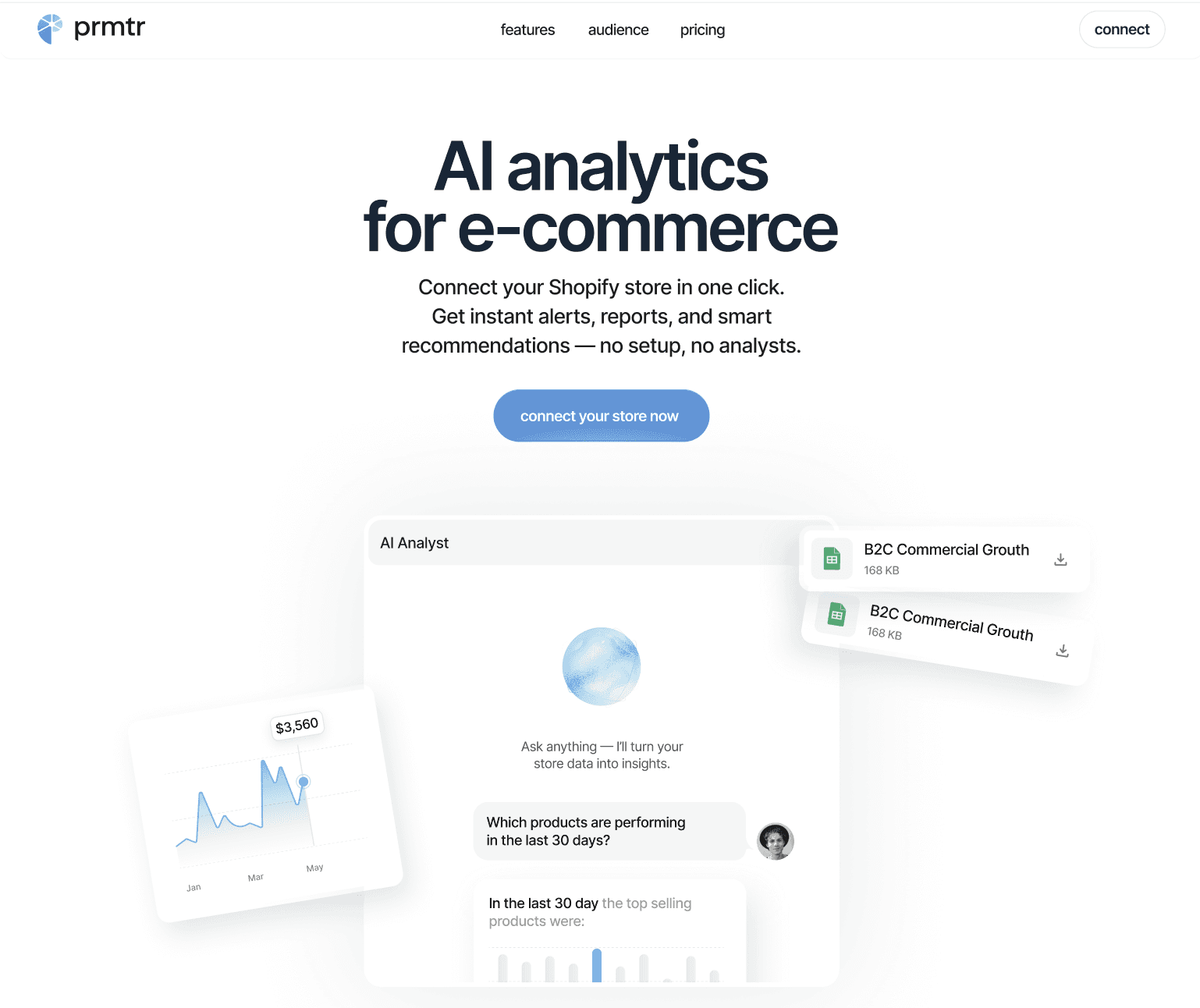
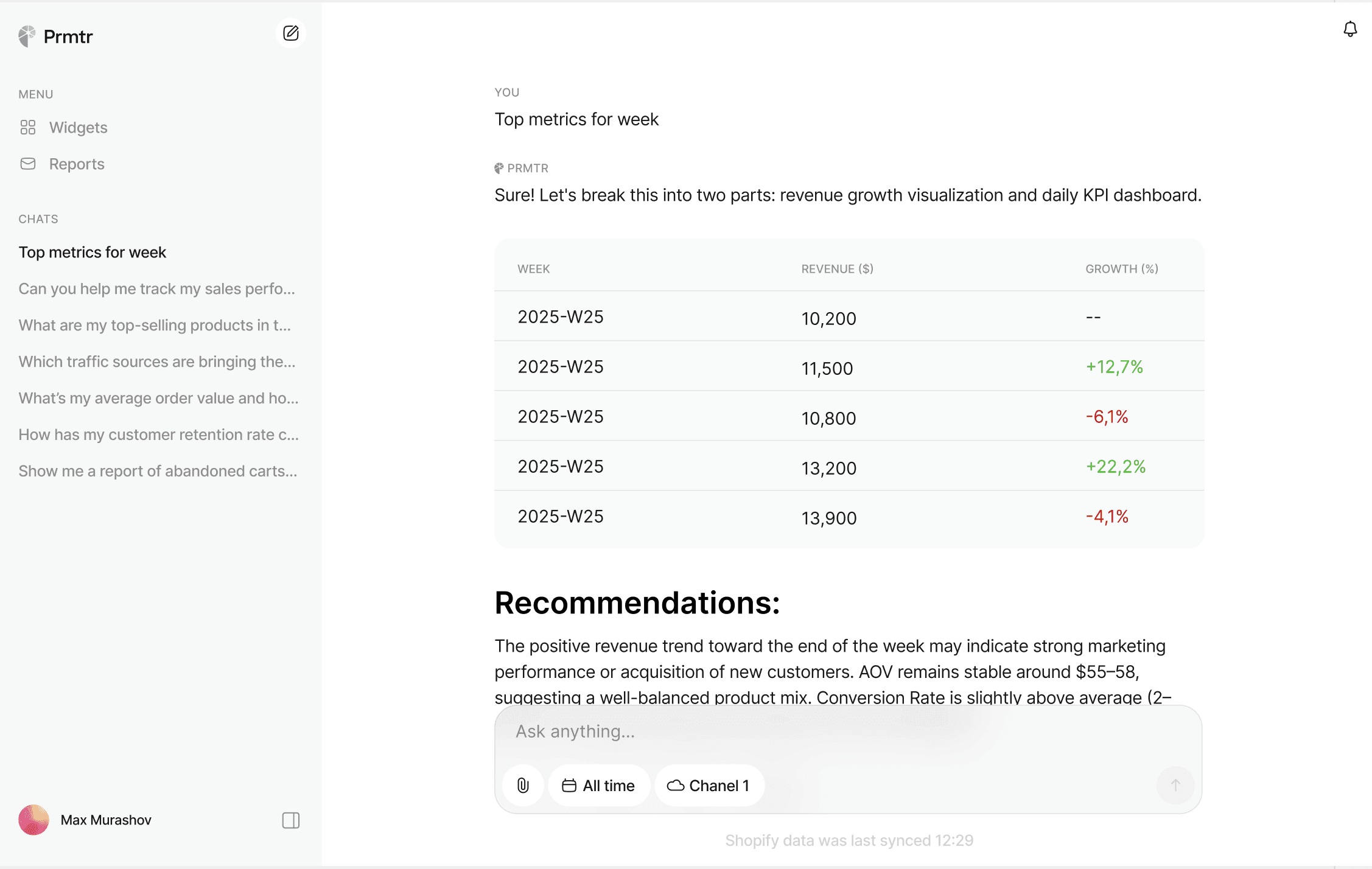
A system that does not just show numbers, it explains them. Someone asks “why did our sales drop last week?” in plain language and gets an immediate, narrative answer.
Underneath, scattered e-commerce data is consolidated into a single intelligent layer, so the team understands not only what happened but what caused it.
The interface keeps the interaction deliberately familiar: questions read like questions, and answers are organised as a short explanation supported by the relevant metrics. That makes the analysis easier to share and easier to challenge.
From data to decision
Shopify data moves through a structured analytics stack before it reaches the language layer. This separation matters: the model is not asked to improvise business facts, but to work from prepared, queryable data and return the reasoning in a form the team can understand.
The result is a shorter path between noticing a change and deciding what to do about it — with one shared explanation instead of several competing dashboard interpretations.
What the work puts in place.
What changed
- Decisions made in minutes rather than meetings
- One shared picture of what happened and why
- Less time spent reading dashboards
- Questions answered in the words people actually use
Project surface
- Conversational analytics
- Commerce data foundation
- AI orchestration
- Product experience
Built with
- OpenAI
- LangChain
- LangGraph
- Shopify
- Fivetran
- dbt
- PostgreSQL
Something here look like the problem you have?
Start a project